Thanksgiving ESL activities: 10 discussion questions for B1–C1
Need Thanksgiving ESL activities for adults or teens? Explore 10 thought-provoking B1–C1 discussion questions, cultural debates and gratitude prompts for your English class.

By Fatima · TESOL-qualified English teacher
· 5 min read

If you’ve ever asked English students, “What are you thankful for?”, you know how quickly the conversation can run out of steam. Thanksgiving is a great opportunity to go beyond basic gratitude vocabulary and encourage students to express opinions, defend their arguments, explore cultural differences, and have meaningful conversations in English.
How to Introduce Thanksgiving to English Learners
Before jumping into the discussion questions, take a few minutes to introduce Thanksgiving and its cultural context. Ask students what they already know about the holiday. They might associate it with turkey, family gatherings, American traditions, or the beginning of the holiday shopping season.
You could also discuss how Thanksgiving is celebrated in the United States and Canada, noting that the traditions and dates differ. It’s worth acknowledging that Thanksgiving in the United States has a complex history, including the experiences and perspectives of Indigenous peoples.
Remind students that they don’t need to celebrate Thanksgiving themselves to participate. The holiday can simply be a starting point for exploring culture, values, and society.
Warm-up questions:
- What comes to mind when you hear the word Thanksgiving?
- Do you have a similar holiday or tradition in your country?
- Why do you think people create holidays around gratitude, family, or food?
10 Thanksgiving Discussion Questions for B1–C1 Students
These Thanksgiving speaking questions are designed to encourage more than one-word answers. Encourage students to explain their reasoning, give examples, and respond to each other’s ideas.
Part 1: Thanksgiving Debate Questions About Culture and Society
1. Has Thanksgiving become too commercialised?
Some people see Thanksgiving as a meaningful opportunity to spend time with loved ones. Others argue that shopping, advertising, and consumerism have taken over.
- Do you think commercialisation has changed the meaning of Thanksgiving?
- Are other holidays becoming more commercialised, too?
Useful language: “I can see both sides of the argument, but…” / “To some extent, that’s true. However…” / “It could be argued that…”
2. Is social media making us less grateful?
People often share their achievements, holidays, purchases, and happy moments online. But does constantly comparing our lives with other people’s make it harder to appreciate what we already have?
- Do people compare themselves to others more than they used to?
- Can social media help us appreciate the good things in our lives?
3. Should everyone have a family tradition?
Thanksgiving is often associated with family gatherings, but not everyone has the same family circumstances or relationships.
- Why are traditions important to some people?
- Can friends become a chosen family?
4. Do people need special occasions to show gratitude?
Birthdays, holidays, and anniversaries often encourage us to express appreciation. But should gratitude be part of everyday life instead?
- Why do people sometimes forget to appreciate ordinary things?
- Is saying “thank you” enough to show gratitude?
5. Is being grateful a choice?
Some people believe gratitude is a mindset we can develop, while others argue that it’s difficult to feel grateful when life is challenging.
- Can people learn to become more grateful?
- Is it fair to tell someone to focus on the positive when they’re going through a difficult time?
Part 2: Thanksgiving Speaking Prompts About Gratitude and Personal Values
6. What matters more: experiences or possessions?
Imagine you have some extra money to spend. Would you rather buy something you’ve wanted for a long time or use the money for a memorable experience?
- Do experiences become more valuable as we get older?
- Can material possessions hold sentimental value?
7. What small, everyday things make life better?
We often focus on major achievements and life-changing events, but small pleasures can make an ordinary day feel special.
- What simple things improve your mood?
- Do people take everyday comforts for granted?
8. If you could express gratitude to one person, who would it be?
Think of someone who has positively influenced your life. It could be a friend, family member, teacher, colleague, or even someone you’ve never met personally.
- What did this person do for you?
- Do you think they realise how much they influenced you?
Students who prefer not to share personal experiences can choose a fictional character or a public figure instead.
9. Would you rather have more time or more money?
Both can make life easier, but people value them differently depending on their circumstances.
- Which would improve your quality of life more?
- Can having more money actually create more stress?
10. If you had to give up one modern convenience, what would you choose?
Imagine you had to live without one everyday convenience, such as food delivery, online shopping, streaming services, or your smartphone.
- Which would be easiest to give up? And the most difficult?
- Do modern conveniences make us happier, or have we become too dependent on them?
How to Turn a Gratitude Discussion into a Classroom Game
📣 Coming Soon (17th November):
To close off your seasonal unit with a bang, we are launching The Gratitude Auction on the 17th of November.
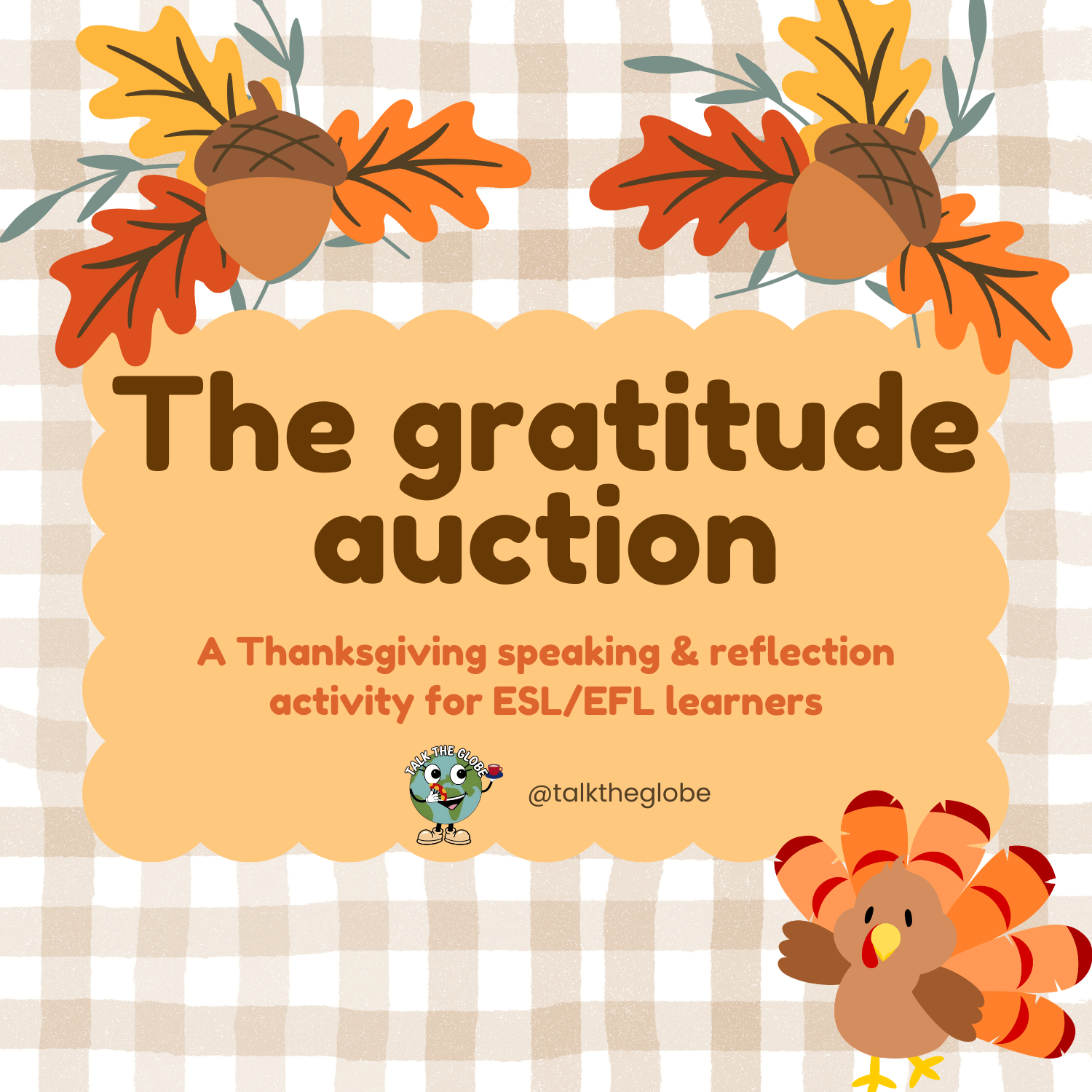
Instead of a standard monologue, your students receive 100 Gratitude Tokens to bid on different areas of life and micro-pleasures. The linguistic hook? To win their bids, they are forced to justify their investments, push back against classmates' arguments, and react to thought-provoking prompts. Zero prep, fully printable, and digital-ready.
👉 Keep an eye on the shop to grab your copy on launch day!
Frequently asked questions
How do you teach Thanksgiving to ESL students?
Start by introducing the holiday’s traditions and cultural context, then use pictures, short explanations, or warm-up questions to activate students’ existing knowledge. For intermediate and advanced learners, discussion questions and debates are excellent ways to practise speaking while exploring cultural perspectives.
What are some good Thanksgiving ESL activities for adults?
Adult learners often enjoy activities that connect the holiday to real-life topics. Try discussion questions about gratitude, consumerism, family traditions, social media, and personal values. Ranking tasks, debates, and interactive games can encourage students to explain their opinions and respond to different perspectives.
What level are these Thanksgiving discussion questions suitable for?
These questions are best suited to B1–C1 English learners. B1 students may benefit from vocabulary support, sentence starters, and extra thinking time. B2 and C1 students can explore the more abstract questions, challenge assumptions, and develop more nuanced arguments.
By
Fatima
TESOL-qualified English teacher · ⭐ 5.0 Google (9)
Fatima has been teaching English to adults from all over the world for more than 5 years. She learned English as a foreign language herself, so she knows exactly where learners get stuck — and how to get past it.
More about Fatima →You might also like

Halloween ESL activities for adults & teens: 3 engaging lesson ideas
How to teach Halloween to older English learners without resorting to childish games.
Cambridge B1 Writing: Tips to Improve Your Writing
Struggling with Cambridge B1 Writing? Learn how to structure emails, articles and stories, avoid common mistakes and prepare with confidence.

Learn English vocabulary from real life
Stop pausing your favourite Netflix series every 30 seconds to write down words you'll never use. Here is how to actually learn real-life English vocabulary while enjoying.